


WHAT REALLY MADE THE ORIGINAL RESIDENT EVIL SO TERRIFYING?

The game that changed how we fear
There is something odd about the first Resident Evil that has little to do with the zombies. The first thing the game asks you to do is just walk through a door. And that may sound harmless until it makes you wait for it. The screen fades to black, and a loading sound plays. Then, a door swings open
to reveal a room you couldn’t observe just a second earlier. You have no clue what’s inside, as you weren’t able to look around before entering it.
You cannot just sprint through the room if things go wrong, and depending on what’s in your inventory, there might not even be enough ammo to deal with whatever is waiting for you. As simple as this setup sounds, it pretty much says a
lot about the game. The original Resident Evil was built at
a time when the technology that developers had access to was nowhere near what we have today. Capcom had to work around all kinds of restrictions.
They could not fill a mansion with fully rendered 3D spaces, seamless transitions, and enemies that appear anywhere. Instead, they had fixed cameras that controlled the player’s
In an era where developers were thriving in genres such as racing and fighting, although mostly in the arcade sector. Capcom was experimenting with how a game could scare players. They drew from different horror movies, games,
and ideas that later became the foundation of the survival horror genre and changed the way games could scare us.
In this article, I want us to go back to before all the sequels and remakes. To understand why Resident Evil became one
of gaming’s defining horror series. Let’s enter the mansion,
and analyze the limitations that helped shape the fear that this franchise has created since the beginning.
Investing in our gaming hobby
Even though I will be talking about the original Resident Evil, my first experience with the franchise wasn’t the first game. It wasn’t even the second or the third. It was the 4th release. Somewhere around 2007, my friends and I used to play video games at my friend Luis’s house. He had a PS2, and for kids our age, it was something exclusive to have, at least where
I grew up.
Naturally, the weekends looked like this: four kids spending most of their few free days at their friend’s house playing
all kinds of games we could find. Our favorites were Pro Evolution Soccer, GTA San Andreas, and a Tony Hawk title
I don’t remember the exact name of.
point of view, and the limited inventory forced them into very difficult decisions. Even the loading screen became a big part of the flow of exploration. Resident Evil’s most memorable ideas were born from those limitations.
We also had an agreement. Whichever money we would get from our parents, we would save a certain amount of it each, and together we would go to the local tech shop to buy new games. Let’s say it was a collective investment
Even though it was Luis’s console, we felt like shareholders when we put our money towards what we considered to be the greater good. I remember it was a Saturday morning when we gathered outside of school just to go and hunt for new games. We didn’t know what we could find, yet we were thrilled knowing that a new game we could enjoy the entire weekend was about to be added to our little party.
One satisfying scary feeling
Got to say we had quite the losses in our investing operation.
We really loved sports games, so I remember we bought this biking game and its sequels. They sucked. The guy who sold us those games was praising them. As kids, we didn’t know better, and we fell for the oldest trick of a salesman.
The weekend came, and we were prepared. We had agreed
to buy something we all liked. Even if one of us was not sure, then we would keep looking. We arrived, and we saw it right there. A brand-new arrival: Resident Evil 4.
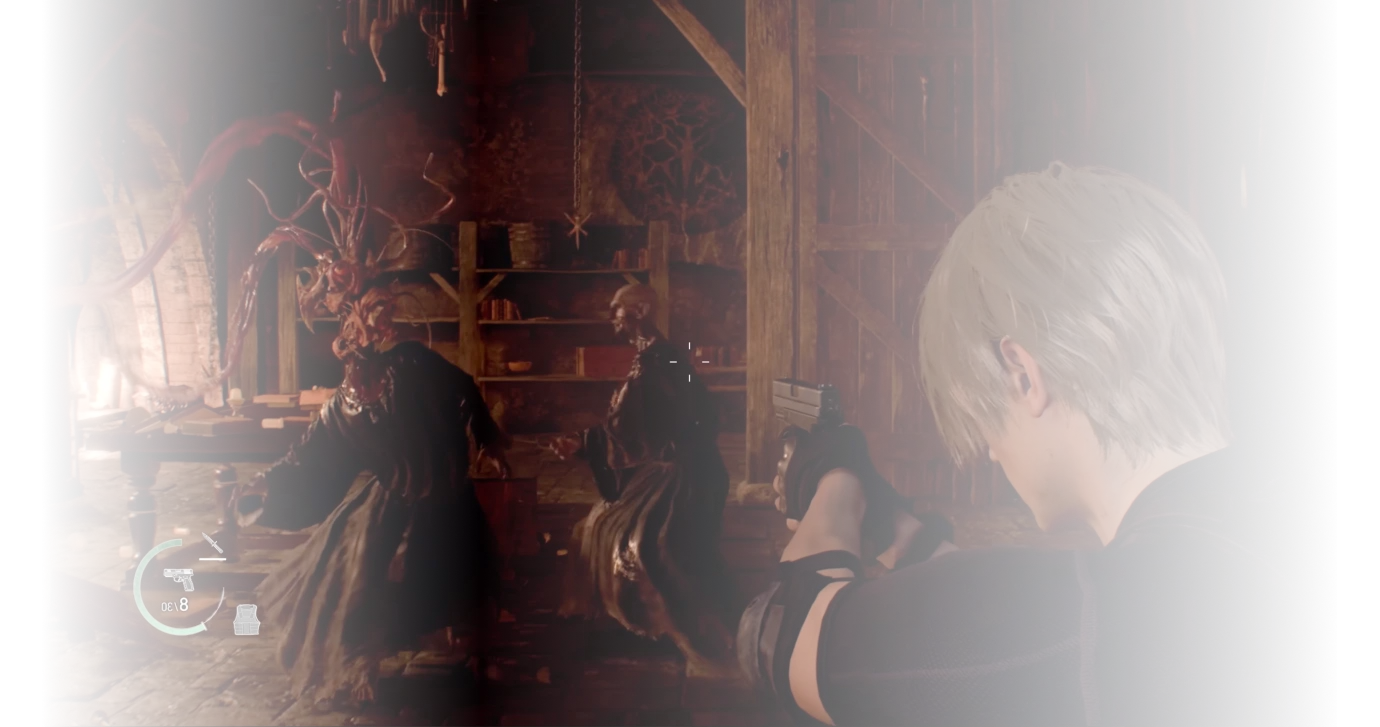
Officer Leon was pointing his gun at us, and something told me this game might be like GTA. However, the seller told us
it was a horror game “too scary for kids like you, and it has zombies.” Our friend Andy told us that he had heard of this franchise, but none of us ever played it.
So after our party reached a consensus, we bought it and ran home to try it. How can we be scared of zombies? We are 13! We are not little kids anymore. That’s what we were saying on the way back home.
We arrived, we quickly installed the game, and we sat to play it. We were taking turns and trying to figure out what the hell we were supposed to do next. The village setup felt totally different from the games we were used to. We could not get
a break from the enemies who weren’t waiting to come at us but instead jumping at us, shouting at us, and pursuing us
through buildings. Somehow they knew exactly where to find us. Yep, we got scared, but we couldn’t stop playing.
A classic story started
in the middle
At that time, I didn’t have a way to explain why Resident Evil 4 worked so well for me. I didn’t know about things like pacing, encounter design, or how the game controlled what players saw and when it happened. I just knew that every time we opened a door or walked into a new area, there was a chance something horrible was about to happen.
Why I mention all this is because years later, when I decided to make this deep dive into the franchise, I found all those memories quite interesting because the game wasn’t really the beginning of the story. If you are at least a bit familiar with the series, you probably know that the mansion in its first game had already become an icon. The limited ammo, the puzzles, the inventory system, and the slow exploration had already defined an entire genre.
All of that already happened when I was simply experiencing Resident Evil for the first time. It was the result of years of experimentation. The game that scared me and my friends was connected to a classic title that suffered from hardware limitations and design ideas that seem kinda strange today.
Let’s take a look at that mansion and travel back to 1996,
into a game that showed an entire generation how scary
a video game can be.
An Evil Home for a Sweet Resident
Before Resident Evil became one, if not the biggest horror franchises in gaming, its starting idea was quite simple:
can a video game make players feel the same fear as a
horror movie? In 1993, Tokuro Fujiwara, a game designer
and producer for Capcom, approached Shinji Mikami with
an idea inspired by Sweet Home, a Japanese horror game released for the Famicon in 1989.
Fujiwara, who had directed Sweet Home, was looking to revisit some ideas with the available technology that just arrived with newer hardware. Mikami was then assigned
to bring this new concept to life. Sweet Home had already experimented with many of the pieces that would one day
define the Resident Evil formula: exploration of a deadly
mansion, solving puzzles, managing an inventory with limited space, and searching for resources while trying to stay alive.
Another crucial aspect was the discovery of documents that would help tell the story by delivering information without interrupting exploration. Most horror films back then already understood that showing less to the audience could perhaps be scarier than showing everything. The challenge was for Capcom to figure out how to make it work on PlayStation.
Technical limitations turned into fear
Resident Evil was initially pictured and planned as a fully 3D game, but with PlayStation’s limited processing power back then, detailed environments and convincing characters were hard to deliver together in real time.
The team eventually turned to a combination of a polygonal character design, the classic clunky look we remember, and pre-rendered backgrounds. Instead of rendering the entire corridor as the player moved, they prepared the images for the environment and placed 3D characters within them.
This made a huge difference. The mansion looked detailed without having to force the console to render everything at once. They could also position the camera wherever they wanted, creating the horror-film vibe they were aiming for.
All seemed like it could work as expected, but this solution came with a dependency. Players couldn’t unrestrictedly rotate the camera to inspect every little corner of the room.
Their view was already defined by what developers selected.
This would sometimes leave important parts of the room hidden from players’ sight. However, this sort of restriction became one of the game’s most effective tools.
The waiting can be terrifying
Picture this: you enter a room with a fixed camera position at the far end, and your character sprints towards the screen,
but the camera gives little information about what’s beyond. You may hear a thing, but you cannot see it. You might spot
a shape in the distance, but you have no clue whether this is an enemy or an object you need to grab. The game decides what you can see. You have to deal with this uncertainty.
Resident Evil’s famous door-opening animations worked like that. They helped disguise the loading times between rooms while players would become anxious to discover what was
on the other side. A technical need became a small moment of suspense that repeated throughout the game.
It started as a feature from limited hardware, but turned into an asset. Fighting every enemy wasn’t always the best choice because the limited ammunition and inventory space would force players to decide whether to pick up an object or not.
Will I need this later on, or can I afford to leave it behind?
Fear came from this kind of uncertainty, and the frightening experience increased naturally.
The Mansion opens its doors
After years in development, in March 1996, the game finally arrived in Japan. It was released for the PlayStation under
the name Biohazard, but for the West, Capcom needed a different title. This is how we got Resident Evil.
The game followed members of the S.T.A.R.S. special police unit as they investigated disappearances in the Mountains
of Arklay, seeking refuge in a mansion filled with creatures from our worst nightmares. What initially seemed to be a straightforward zombie story gradually revealed a much darker conspiracy, involving biological experiments under
the pharmaceutical company Umbrella.
Resident Evil also introduced a term that got associated
with the genre: survival horror. The idea wasn’t to get rid
of everything in sight but rather to try and stay alive while exploring a very hostile place with limited resources.
The original game was never perfect. Controls felt awkward, the voice acting became infamous for its peculiar delivery, and the camera made combat frustrating. But even with all these issues, the game found a loyal audience, and with its commercial success, the company had a reason to expand the concept even more.
Expanding the nightmare
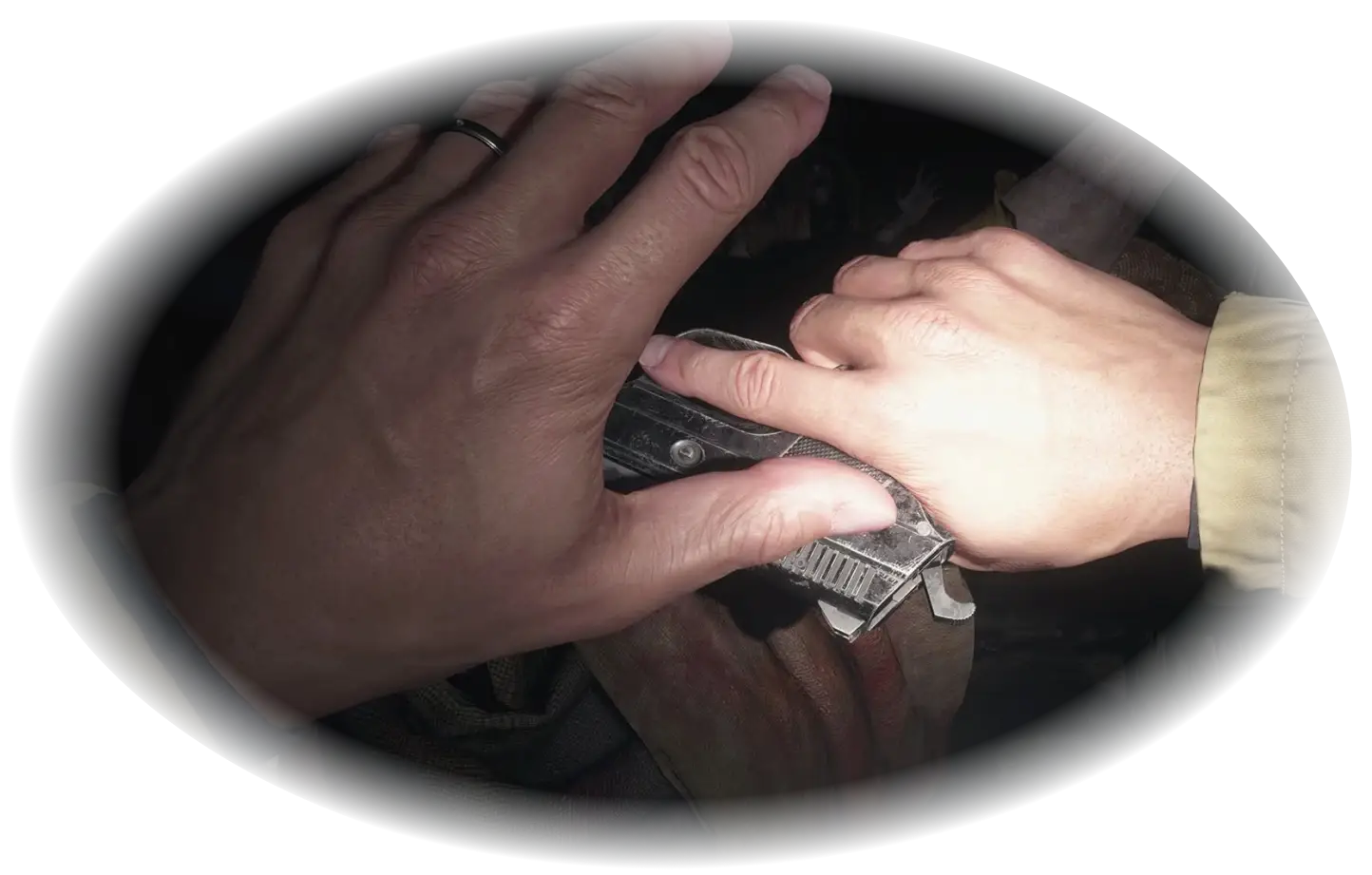
Two years later, we saw the sequel. Resident Evil 2 went from the original mansion to the streets of the beloved Raccoon City. Now the environment became an overwhelming city filled with zombies. Horror scaled to locations like the police station, sewers, and laboratories. Fan favorite characters like Leon S. Kennedy and Claire Redfield were introduced in this sequel and quickly became all-time favorites.
The new expanded narrative presented the scenario system, which allowed players to experience the events of the game through both co-protagonists while their stories overlapped, and decisions that you made with Leon may or may not have an affect on Claire later on.
These early sequels proved that the Resident Evil formula worked with different kinds of horror: the mansion relying
on claustrophobia and exploration, RE2 scaled the world,
and the third game introduced a more immediate and persistent threat.
Even though this formula was working, and with other
entries like RE0 and Code Veronica, the franchise was approaching a problem. The basic structure was starting
to get too familiar to the point that it made the games
feel quite predictable.
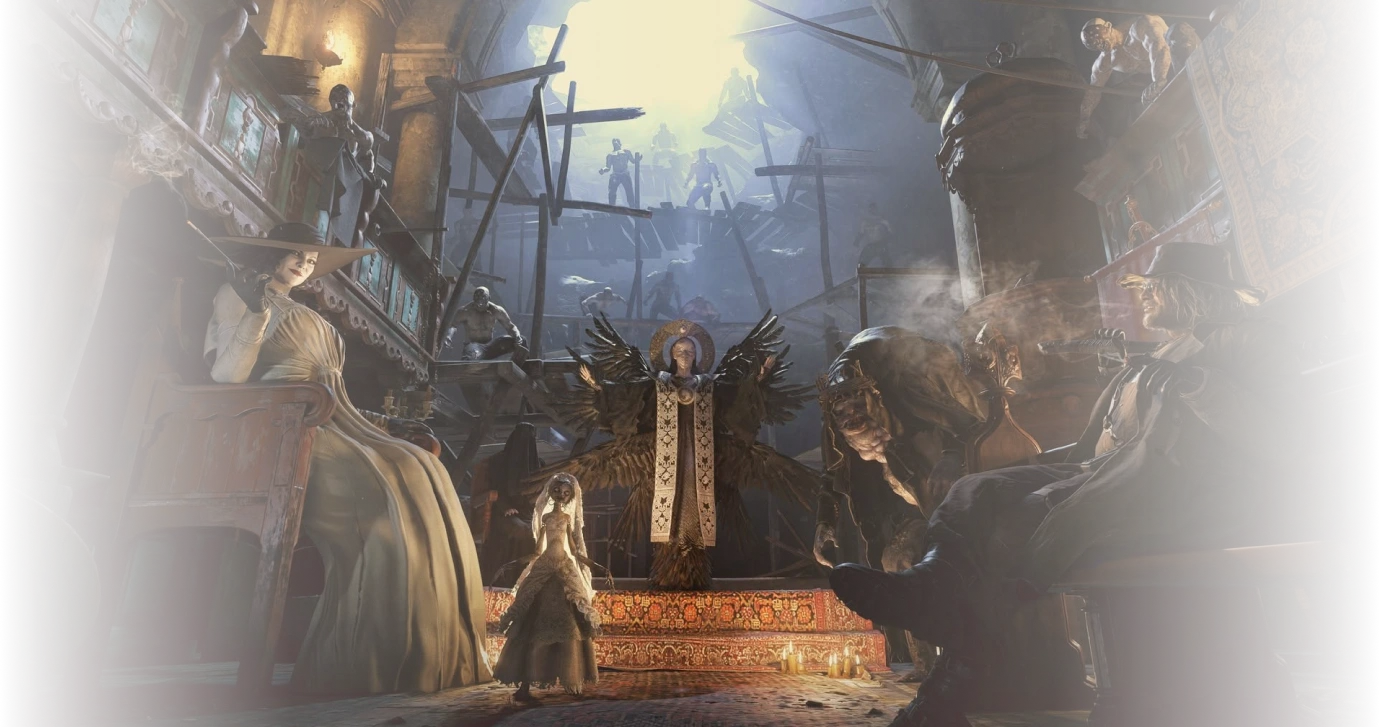
How do you reinvent something that worked so far?
The next game would mark one of the biggest changes in
the franchise. Resident Evil 4 moved away from the fixed camera angles to an over-the-shoulder perspective.
This shift changed how combat felt. Players gained way
more control over their aim, but the enemies were also
more aggressive. Encounters became more dynamic,
forcing players to decide quickly rather than wait in a
fixed room and think of their next move.
The game also introduced a more flexible inventory system while keeping resource management as the main feature. RE4 did not change the successful formula; it improved it. Balancing fear and empowerment, the game made players feel better equipped to fight enemies while rewarding their precision, aggression, and fast reactions.
RE5 was a bit of the same, although I must say it pushed towards more action. Biological horror was still the main theme, but its emphasis on combat made it feel different from the isolated tension of the original mansion.
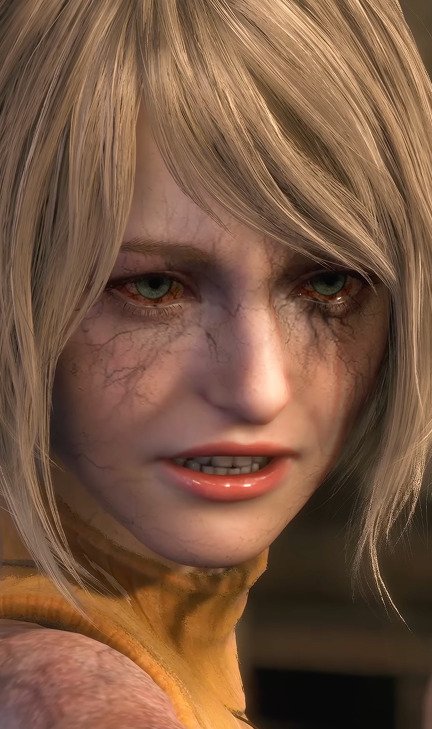
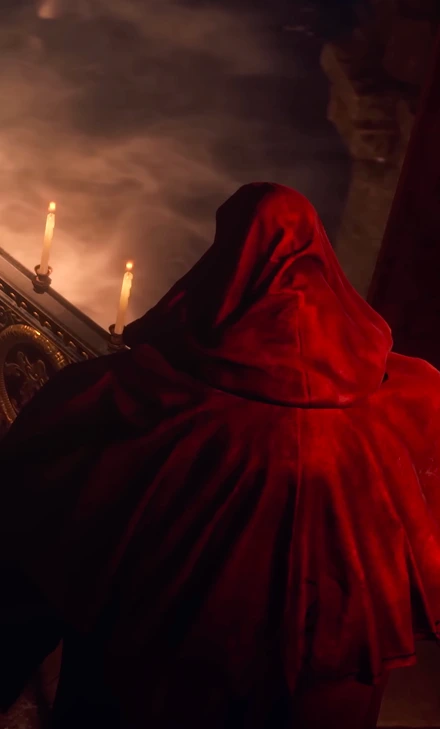
Action vs horror
The 6th entry expanded in that direction. With more missions and a more ambitious global bioterrorism story. It offered a wide variety of action scenarios, and here is where players started to wonder if the franchise’s identity was getting hard to pin down. We went from slow exploration and vulnerability to large battles and cinematic action. The new question was how to make Resident Evil frightening once again.
After several years of focusing on action, Resident Evil 7: Biohazard brought the franchise back to its horror roots,
The game changed the large battles for claustrophobic rooms, limited resources, and enemies that were actually
a real-time threat.
In 2021, Resident Evil: Village came out as a combination of both the classic stressful exploration and cinematic combat. Capcom was not interested in choosing between horror and action; they were focused on finding the right balance.
Thirty years
of fear

The last entry would celebrate thirty years of the series. Resident Evil Requiem brought us back to Raccoon City. Capcom described it as an attempt to bring together two sides of Resident Evil: intense horror and thrilling action.
That balance has always been at the heart of the series’ evolution. If we think about it, there is no single formula
that worked for the game, nor one that they had followed.
Even remakes of the classics are sort of a reinterpretation
of that experience for newer generations. It was Capcom’s willingness to question how the series should continue growing after so many years.
That same willingness also explains why the series has remained relevant while other horror franchises struggle
to keep their identity. Resident Evil never stood still and
quiet despite having a divided reception when changes
didn’t work the same for everyone.
Resident Evil’s history and legacy remind us that the horror doesn’t depend fully on how realistic a game looks or how powerful the enemies are. Sometimes fear comes from not knowing what’s behind the door. Sometimes it comes from having only a few bullets left. And sometimes it comes from hearing a sound that makes you stop moving.
Thirty years later, these doors still open, and we still have
to decide if we step through them or not.