







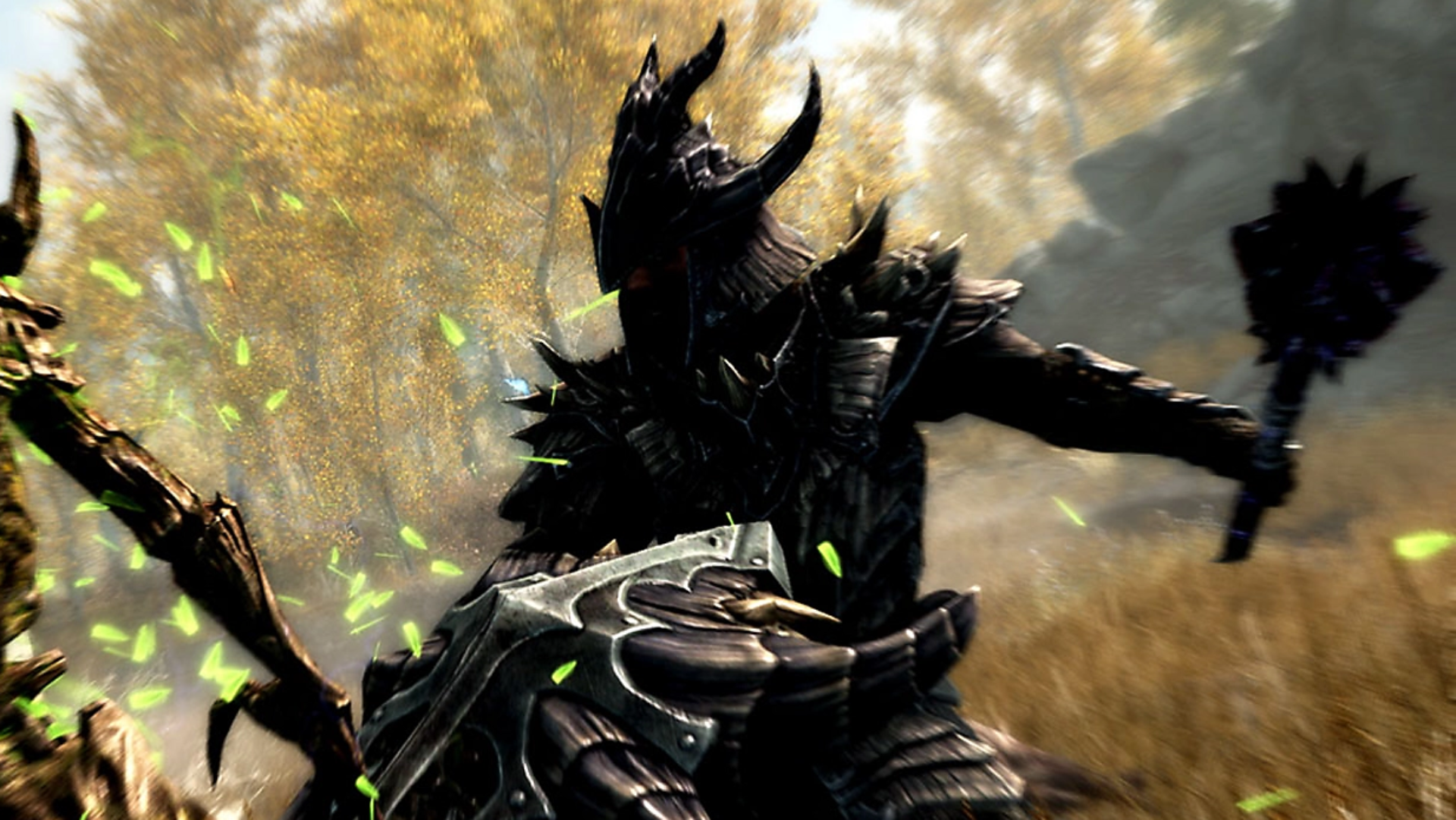
Skyrim's lead designer Bruce Nesmith says Howard understands what players want, knowing when to simplify mechanics and prioritize an enjoyable experience.
Todd Howard is widely recognized as one of the most influential figures in game development, but his personal approach to designing games remains relatively private. According to Bruce Nesmith, lead designer of The Elder Scrolls V: Skyrim, however, one of Howard's greatest strengths is his ability to understand what players actually want from a game.
In an interview with The Examined Game, Nesmith reflected on his experience working alongside Howard at Bethesda. He explained that Howard has a particular talent for stepping away from the technical side of development and looking at games through the eyes of an everyday player.
"Part of what Todd has, historically for Skyrim and Fallout 3 and everything, been very good at is putting himself in the seat of your typical player," Nesmith explained.
He added that developers can sometimes become too focused on complicated systems and technical details, making it difficult to recognize what players find enjoyable.
As Nesmith put it, Howard knows when to step back and recognize that players might simply be looking for a little fun rather than another complicated decision or mechanic.
Nesmith acknowledged that developers naturally develop a deeper understanding of their games because of how closely they work with the systems behind them. However, this familiarity can sometimes lead to unnecessary complexity.
He recalled how his own design instincts occasionally leaned toward more elaborate mechanics, while Howard was willing to challenge those ideas.
According to Nesmith, Howard would often recognize when a feature needed to be more straightforward, favoring something players could understand and enjoy without having to work through excessive layers of complexity.
That doesn't mean Howard avoids thinking deeply about game design. Nesmith emphasized that both designers bring different perspectives to the table, and neither approach is necessarily perfect on its own.
He believes successful development often comes from working with people who challenge existing assumptions. Having different viewpoints allows teams to examine their ideas more thoroughly and create experiences that consider more than one perspective.
Nesmith also shared an example from the development of The Elder Scrolls IV: Oblivion that demonstrates why listening to other team members matters.
One artist raised concerns about the game's Detect Life spell. Although the ability served a useful gameplay purpose, it created an unexpected problem for the visual presentation.
When activated, the spell highlighted nearby creatures and characters, making them appear as indistinct smudges rather than showcasing the detailed character models the art team had worked so hard to create.
The feedback encouraged the developers to reconsider how the ability functioned.
By the time Skyrim arrived, the spell had been adjusted to consume resources much more quickly, encouraging players to activate it briefly rather than leave it running for extended periods.
This relatively small adjustment helped preserve the usefulness of the ability without compromising the visual experience.
For Nesmith, the example highlights how valuable it can be to listen to people outside the immediate design process. Artists, developers, and other team members may notice problems that aren't immediately obvious to those working on gameplay systems.
Howard's approach has helped Bethesda make its role-playing games more accessible to a wider audience. Fallout 3, for example, introduced many players to a more approachable style of RPG, making the genre easier to enjoy without requiring extensive knowledge of traditional computer role-playing games.
However, simplicity also comes with potential drawbacks.
While accessible mechanics can make a game more welcoming, removing too much complexity can leave players with fewer meaningful choices and less freedom to experiment.
This raises an interesting question about Bethesda's later releases, particularly Starfield. Although the sci-fi RPG offers a large universe to explore, its role-playing systems have been criticized for lacking some of the depth, flexibility, and unexpected interactions that made earlier Bethesda adventures so memorable.
Ultimately, Howard's strength may lie in understanding when to simplify a game without losing what makes it special. Creating an enjoyable experience isn't always about adding more mechanics or making every system increasingly complicated. Sometimes, the best design decision is knowing what players don't need.
Be Part of It