
Revisiting a beloved video game can be a risky business. Change too much, and longtime fans may feel that a cherished memory has been altered beyond recognition. Change too little, and a remake risks feeling unnecessary. With The Legend of Zelda: Ocarina of Time coming to Nintendo Switch 2, Nintendo faces the challenge of updating one of gaming's most influential adventures for a new generation without losing what made it special.
The 1998 Nintendo 64 classic is receiving a substantial visual and mechanical upgrade, giving players a new way to explore Hyrule. During a hands-on demo, the improvements were immediately apparent, from more responsive controls to a newly orchestrated soundtrack. Even seemingly minor changes have a noticeable impact on the experience, including the Castle Town shooting gallery, where more precise aiming makes it considerably easier to hit targets and earn rewards.
For Link, the young hero raised in the forest, the updated adventure brings several welcome conveniences. He can now sprint across the landscape instead of relying on endless forward rolls, jump manually, and control the camera more freely. A scrolling inventory bar also replaces the original game's cumbersome menu navigation, making it easier to switch between equipment and items.
These additions might seem basic by modern gaming standards, but they make a meaningful difference when revisiting a game originally designed for much older hardware. Link feels more responsive, exploration is less cumbersome, and navigating familiar locations becomes a smoother experience.
One of the biggest challenges facing Ocarina of Time is the legacy of its original release. The Nintendo 64 game helped define what a 3D action-adventure could be, introducing players to a vast fantasy world filled with memorable characters, elaborate dungeons, and environmental puzzles.
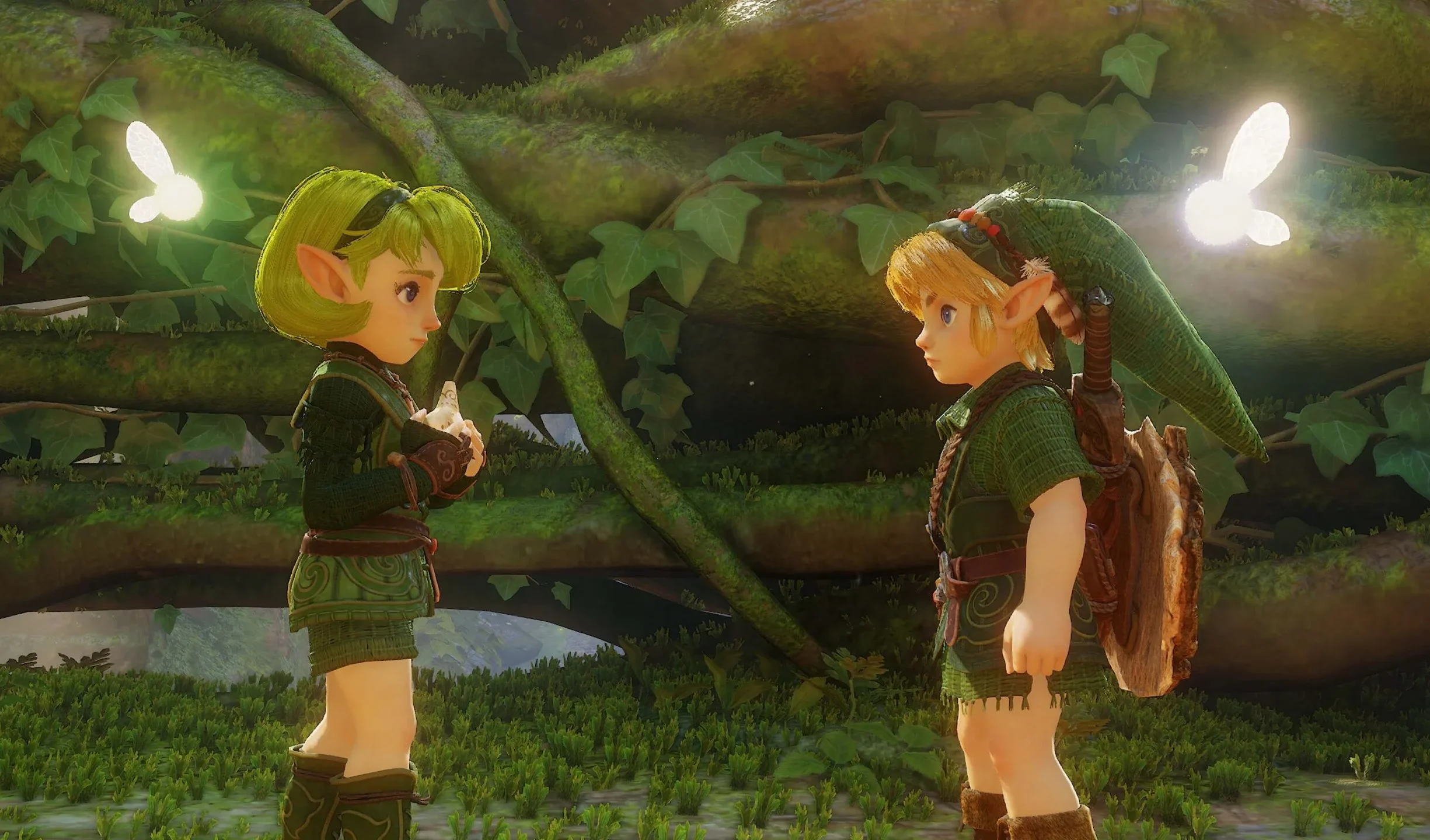
That sense of discovery is difficult to recreate nearly three decades later. Hyrule Field, once an extraordinary example of freedom in a video game, inevitably feels more familiar to players who have since explored much larger open worlds. The Switch 2 remake compensates with more detailed environments, including sunlight reflecting off puddles, richer vegetation, and more convincing natural scenery.
The visual improvements make Hyrule more inviting without completely transforming its underlying design. The world remains relatively contained compared with the sprawling landscapes of modern The Legend of Zelda adventures, but that structure is part of the experience's enduring appeal.
For newcomers, the remake offers an opportunity to discover why Ocarina of Time remains so highly regarded without having to contend with the limitations of its original hardware. For returning players, it provides a chance to experience familiar locations with a fresh visual perspective.
Not every fan will want the series to return to this more structured approach. Recent entries have embraced open-world exploration, encouraging players to experiment and chart their own paths through Hyrule. By comparison, Ocarina of Time follows a more deliberate progression, with carefully designed dungeons and puzzles that build on the abilities and tools Link acquires throughout his journey.
That more focused design remains one of the game's greatest strengths. Each dungeon has its own identity, populated by distinctive enemies, hidden mechanisms, and puzzles that demand observation and experimentation.
Even players who remember the original may find themselves struggling to solve some of its most challenging rooms. The Forest Temple, for example, still requires careful navigation and an understanding of its interconnected architecture. The experience demonstrates just how effectively the original developers used three-dimensional environments to challenge players, particularly given that many of these design techniques were still relatively new in 1998.
The visual upgrades are only part of the remake's appeal. Ocarina of Time is also receiving a newly orchestrated soundtrack that gives its familiar melodies greater depth and presence.
The original Nintendo 64 release relied on the hardware's limited audio capabilities, yet its music became one of the most recognizable elements of the entire franchise. The new arrangements preserve the identity of those compositions while allowing individual instruments to shine.
Subtle brass passages during enemy encounters, sweeping melodies across Hyrule, and the music accompanying key locations all benefit from the richer presentation. Rather than simply reproducing the original soundtrack with improved audio quality, the orchestration gives familiar themes room to breathe.
For longtime fans, the music may prove just as effective at rekindling memories as the visual overhaul. For new players, it helps establish the atmosphere and emotional character that made the original adventure so memorable.
Not every change has been universally welcomed. While Hyrule's updated environments generally benefit from additional detail, Link's redesigned appearance has proved more controversial.
The young hero now has larger, glassier eyes, fuller cheeks, and skin that reflects light with an almost porcelain-like finish. Some critics have questioned whether the redesign prioritizes visual effects and surface detail over the original character's artistic identity.
It is a familiar debate surrounding modern remakes: just because newer hardware can render more detail does not necessarily mean every character needs a more realistic appearance. A successful redesign must preserve the personality and visual language that made the original memorable.
However, Link's appearance looks more cohesive when viewed in motion than isolated screenshots might suggest. The enhanced character model fits the remake's broader visual direction, which leans toward a more detailed and expressive interpretation of Hyrule.
There is also a possible artistic explanation for the doll-like aesthetic. Takaya Imamura, a veteran Nintendo artist who previously worked on The Legend of Zelda, has suggested that the character design may reflect Shigeru Miyamoto's appreciation for ningyogeki, a traditional Japanese form of puppet theater.
Unlike the perception of puppetry in some Western cultures, where it is often associated primarily with children's entertainment, Japanese puppet theater has a respected artistic tradition. Its stylized characters and expressive designs could offer an interesting reference point for Link's exaggerated features.
Writer and translator Paul McQuade has also suggested that this interpretation is plausible, noting that Japanese puppet theater encompasses a much broader artistic tradition than its common Western associations might imply.
Seen through that lens, Link's youthful proportions and porcelain-like appearance could be an intentional stylistic choice rather than an attempt to make the character look more realistic. His design also reflects the story's setting, where the children of the forest inhabit a world seemingly untouched by the passage of time.
Nintendo has not publicly confirmed this interpretation, so the precise reasoning behind the redesign remains uncertain. Nevertheless, it offers a more interesting possibility than assuming the changes exist solely to showcase the Switch 2's graphical capabilities.
The remake's most interesting achievement may be the balance it strikes between preserving the past and making room for modern expectations. Its updated controls, more detailed environments, and reworked soundtrack acknowledge how much gaming technology has evolved since 1998, while its traditional dungeon design maintains the structure that made the original so influential.
That balance matters because Ocarina of Time is more than a nostalgic favorite. Its approach to three-dimensional exploration, combat, and puzzle design helped shape countless adventures that followed. Recreating those ideas for contemporary hardware is therefore as much about respecting its design legacy as it is about improving its presentation.
The updated version does not need to reinvent every aspect of the original to justify its existence. In some ways, its greatest strength lies in recognizing that a well-designed adventure can remain engaging even when its mechanics are no longer revolutionary.
There will inevitably be disagreements about Link's new appearance and whether the graphical upgrades go too far. Yet the hands-on experience suggests that Nintendo has retained the essential ingredients: memorable dungeons, satisfying puzzles, atmospheric music, and a world worth exploring.
The Legend of Zelda: Ocarina of Time is scheduled to launch on Nintendo Switch 2 on November 5, 2026. If the finished game delivers on the promise of the preview, it could offer both longtime fans and newcomers a compelling reason to return to Hyrule.